
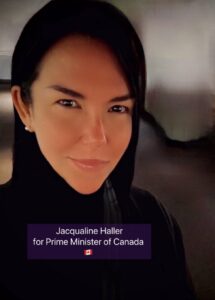
Independent Candidate for Prime Minister of Canada.
The full campaign history can be read by clicking HERE.
In November 2023, I publicly announced my intention to seek the Office of Prime Minister of Canada as an independent candidate in the federal election, then scheduled for October 2025. From that point forward, I began an active political campaign, publicly presenting my platform, and engaging with Canadians daily.
My expectation was simple: as the campaign developed, Canadian media would report on it and allow Canadians to evaluate my ideas and vision for themselves. Because Canada operates under the Westminster parliamentary system, inherited from the UK, an independent candidate for Prime Minister would raise important questions about democratic participation and electoral reform. By announcing my intentions nearly 2-years before the scheduled election, Canadians would have had ample time to consider and debate these issues.
Despite extensive efforts to attract attention to the campaign, including directly contacting media organizations, engaging publicly, and through social media, I received no coverage from either mainstream or Indigenous media outlets. Regardless, I continued to campaign.
During the summer of 2024, my candidacy and campaign information was sent to all major Canadian and Indigenous media organizations across the country. No responses were received.
In September 2024, I contacted Elections Canada. I explained that I had publicly declared my intention to seek the Prime Ministership as an independent candidate and wished to ensure compliance with all applicable legal requirements, particularly given the possibility of an early election potentially being call. I stated that I met the constitutional qualifications to serve as Prime Minister and asked what process existed for an independent candidate seeking recognition outside the structure of a registered political party.
In response, I was informed that Prime Ministers emerge through the political party system, and was provided information regarding membership to a political party.
Following this exchange, I attempted on 3-occasions to contact the Governor General of Canada by email. I outlined my campaign, explained the issues involved, and requested a meeting.
No response was received.
Shortly thereafter, an early federal election was called by the new Prime Minister Mark Carney, who had recently succeeded Justin Trudeau following his resignation.
Following the election call, members of my support team telephoned the Governor General’s Office to convey the urgency of the matter and the significance of a campaign that had already been underway for well over a year. The call was transferred to the Governor General’s executive office, where several messages were left.
No response was received.
With the new election date rapidly approaching, I travelled to Ottawa and attempted to request a meeting in-person. The Commissioners working that day advised that any meeting would need to be arranged in advance. Although the circumstances and prior attempts to establish communication were explained, no accommodation was made. I then spoke with Ottawa police officers who were present and nearby for another event. They advised me they were not able to assist, and to continue attempting to contact her.
As the election date approached and no response had been obtained from the relevant institutions, I concluded that pursuing legal avenues was my only remaining option.
In April 2025, I contacted the Supreme Court of Canada and explained the situation. I was advised that the matter would first need to proceed through the Federal Court system, and to bring it to the Supreme Court of Canada if there was no appropriate resolve at that level.
An early federal election proceeded in May 2025, and the Liberal Party won again.
In June 2025, I commenced legal action against the Crown in the Federal Court, arguing that Canadians have the right to directly choose their own Prime Minister. The claim was dismissed. I subsequently appealed to the Federal Court of Appeal, where the matter was again dismissed. These proceedings took 6-months.
In January 2026, I brought this matter before the Supreme Court of Canada. On August 6, 2026, after approximately 7-months, the Court dismissed the application. No written reasons accompanied the decision.
At the heart of my effort has been a question that extends beyond one individual, one campaign, or one court case: who should ultimately determine the leadership of Canada? Canadians, or political parties.
Throughout this process, I have maintained that Canadians deserve the fullest possible opportunity to hear alternative political voices, assess competing visions for the country, and make informed democratic choices. The principles of free expression, open political discourse, and democratic accountability exist to serve the public and to ensure that power remains rooted in the consent of the governed.
While my legal efforts have not achieved the outcome I sought, the broader conversation about electoral reform, democratic participation, and the rights of Canadians to shape their political future remains unresolved. For that reason, I continue to believe these issues deserve public discussion, scrutiny, and debate.
Democracy is strengthened when ideas are openly contested, when institutions remain accountable, and when citizens are free to decide for themselves what kind of future they want for their country. That principle remains at the centre of my efforts, and it is why this conversation continues.
Jacqualine Haller 🇨🇦
Please continue to look for updates on my Instagram page, and follow along there.
********
The Jacqualine Haller Political Platform
For those who have read my book, Pilgrimage for an OM, you are already familiar with my personal journey, the educational and professional choices I have made throughout my life, and the experiences that shaped my values and understanding of Canada.
In November 2023, I publicly announced my intention to seek the Office of Prime Minister of Canada in the next federal election, then scheduled for October 2025. From that day forward, I began actively campaigning and engaging with Canadians from all walks of life.
For those reading outside Canada, a federal mandate is generally 4-years in length.
Throughout this campaign, I have listened carefully to Canadians of every age, background, profession, and region. The concerns I hear repeatedly are often the same concerns I share myself: the rising cost of living, access to education, affordability, economic opportunity, housing security, and the long-term future of our country.
My objective is not to make unrealistic promises.
Instead, I want to speak honestly about what can reasonably be accomplished within a 4-year term while laying a foundation for future generations. Meaningful reform requires practical solutions, responsible planning, and a government that is willing to think beyond the next election cycle.
I have also continued speaking against the expansion of Medical Assistance in Dying (MAID) and support measures, including the forgiveness of outstanding CERB debts, that would provide financial relief to Canadians who continue to feel the economic effects of the pandemic. My view is that economic recovery should strengthen the middle class, encourage growth, and help Canadians rebuild stability in their lives.
The platform that follows reflects these priorities.
Jacqualine Haller for Prime Minister of Canada
A vision for a stronger, more affordable, and more connected Canada.
Jacqualine Haller for Prime Minister of Canada
Campaign Platform:
1. Free Public Post-Secondary Education with a ‘time-back’ model:
The rising cost of living, increasing food prices, and growing tuition expenses have made post-secondary education increasingly difficult for Canadian families to afford. Too many students begin their careers burdened by significant debt, while parents often struggle to help support their children’s educational goals.
Around the world, many countries have recognized higher education as an investment in their future and provide free or low-cost public post-secondary education to their citizens. Canada should do the same.
The challenge is not simply making education more affordable. It is ensuring that Canadians continue to benefit from the skills, knowledge, and expertise that public investment helps create.
My proposal is a compensated “time-back” model. Under this approach, tuition costs would be publicly funded in exchange for graduates contributing a defined period of service within Canada in their chosen profession. This would help retain skilled workers, strengthen our healthcare system, support economic growth, and ensure taxpayers receive a meaningful return on their investment.
Countries that currently offer free or substantially reduced public post-secondary education include: Greece, France, Germany, Austria, Finland, Norway, the Czech Republic, Sweden, Denmark, Iceland, Belgium, Brazil, Argentina, Hungary, Spain, Egypt, Italy, Belarus, Cyprus, Scotland, Slovenia, and Bulgaria.
If Canada can invest billions abroad, we can afford to invest in our own people. Funding education is not an expense; it is an investment in the next generation of Canadians. By helping people succeed, we strengthen our economy, our communities, and our future.
2. High-Speed Electric Rail: Connecting Canada and Building Our Future:
Canada is one of the most geographically diverse and beautiful countries in the world. From the Rocky Mountains of the West to the Prairies, the Great Lakes, the forests of Ontario and Quebec, and the rugged coastlines of Atlantic Canada, every region offers its own unique character and opportunities.
Having lived in Saskatchewan, Manitoba, Alberta, British Columbia, and Ontario, and having travelled extensively across the country during a 21-year career in the airline industry, I have seen firsthand both the beauty of Canada and the challenges Canadians face when travelling within their own country.
For many Canadians, exploring Canada is prohibitively expensive. Some Canadians have never had the opportunity to leave their home province, despite spending their lives contributing to the country they helped build.
My vision is to create a modern network of high-speed electric rail connecting major cities and regions across Canada.
Around the world, high-speed rail has transformed transportation by providing affordable, efficient, and environmentally responsible travel options. Canada should not lag behind.
A national high-speed rail system would generate skilled jobs, strengthen regional economies, support domestic tourism, reduce transportation costs for Canadians, and create new sources of economic activity and tax revenue. By increasing movement between communities and provinces, we can help stimulate local businesses while making Canada more accessible to both Canadians and international visitors.
This is not simply a transportation project. It is a nation-building project. It is an investment in economic growth, national unity, environmental stewardship, and future generations.
We do not need more carbon tax in Canada. We need to start thinking about long-term goals for all Canadians and future Canadians. It is our job to take care of future generations. I am always speaking about “ancillary tax revenue” – and we find it here.
3. Stimulating Canada’s Economy:
Canadians across the country are facing significant economic challenges. Rising inflation, housing affordability concerns, and uncertainty about the future have placed increasing pressure on individuals, families, and businesses alike.
We are also witnessing a growing number of talented professionals leaving Canada in search of greater opportunities and a lower cost of living elsewhere. This represents a loss of valuable skills and economic potential for our country.
How do we reverse this trend?
The answer lies in re-evaluating government spending priorities, encouraging economic growth, and finding innovative ways to return more money to Canadians. My goal is to reduce the financial burden placed on households through a gradual and responsible reduction of the Goods and Services Tax (GST), while ensuring government revenues remain sustainable. For those of my generation and older, you will remember that the GST was originally promised to be a temporary tax. The GST was introduced by the Progressive Conservative Party, who was in office at the time.
Such a transition cannot happen overnight. It requires careful planning, fiscal responsibility, and honest communication with Canadians. However, with a long-term strategy focused on economic growth and new sources of revenue, tax relief can become an achievable objective.
A stronger economy begins by putting more money back into the hands of the people who earn it.
4. Universal Basic Income (UBI) :
In a country as prosperous as Canada, no one should be left without the means to meet their basic needs.
Yet across the country, communities are facing growing challenges related to homelessness, housing insecurity, and poverty. As a 5-generation Canadian who has lived in 5-provinces, I believe we can and must do better.
I believe every Canadian deserves a basic standard of living and a foundation from which they can build a better future for themselves and their families.
A Universal Basic Income (UBI) would provide Canadians with that foundation. It would ensure that individuals have access to essential support while preserving dignity, encouraging independence, and creating greater financial stability. Canadians want to work, contribute, and participate in the economy. UBI is not about replacing ambition; it is about ensuring that no one falls through the cracks.
I view UBI as an investment in people. By reducing poverty and improving financial security, we can also reduce pressure on other public systems, including healthcare, emergency services, and social assistance programs.
Evidence from UBI pilot programs that have already run in Canada have shown that income support can contribute to improved educational outcomes, stronger labour force participation, better health outcomes, and greater financial stability. Streamlining support through a basic income model also reduces administrative costs associated with multiple overlapping and outdated assistance programs.
Canada has the resources to ensure that every citizen has the opportunity to live with dignity. A Universal Basic Income would help create a stronger, healthier, and more resilient society for all Canadians.
*****
Being Canadian means something.
It means believing that democracy matters, that every voice counts, and that our differences do not divide us, but strengthen us. Canada has long been viewed as an example of what is possible when people work together with respect, compassion, and a shared commitment to the common good. Canada should be a place that inspires hope, opportunity, and mutual respect.
I believe we can build a more affordable, more connected, and more prosperous Canada for everyone.
If you would like me to speak with your group or organization, or if you would like to be a campaign volunteer, please send an email to: info@jacqualinehaller.com.
All campaign donations, regardless of amount, are greatly appreciated. Please see campaign donation options below:
I would like to make a $10 campaign donation today! ~ CLICK HERE!
I would like to make a $25 campaign donation today! ~ CLICK HERE!
I would like to make a $50 campaign donation today! ~ CLICK HERE!
I would like to make a $100 campaign donation today! ~ CLICK HERE!
I would like to make a $500 campaign donation today! ~ CLICK HERE!
I would like to choose my campaign donation amount ~ CLICK HERE!
Thank you for supporting a movement dedicated to strengthening Canada’s future.
Jacqualine Haller
Moving Canada Forward ~ faire avancer le Canada!
Books by Jacqualine Haller:
On February 22, 2022 – I published my 4th book titled: “You woke me up to see the Moon” – 112 Reflections of the Heart. Gold nuggets of wisdom for a world in turmoil. This book is a collection of affirmations that come from inspired moments in life. May it provide you deep contemplation, reflection and understanding.
The year previously, I published my 1st children’s book titled: “Love You to the Stars and Back” . I wrote this book after losing my dad to ALS. It is inspired by my family’s true story. In “Love You to the Stars and Back”, I write about a sweet story that happened while visiting my dad in the hospital during the final months of his life. This book is written to help explain where Grandpa eventually went, in a gentle, simple way for younger children (2-5 years of age) to understand.
To my surprise, the little family-story book was needed more then I realized. I have received many beautiful messages from families who were going through what my family had been through. On the heels of that, I published my 2nd children’s book titled: “Grandpa John and Uncle Peter” – This is the story of 2 little brothers (my dad and my uncle when they were little boys) from a small village in rural Saskatchewan Canada. Follow along in their adventure as they experience being apart when Grandpa John goes to school for the very first time.
“Grandpa John and Uncle Peter” teaches children (and adults) that sharing feels good and is rewarding. It teaches them that taking care and watching out for each other is important. It teaches that detours in life can be fun because they lead us to new experiences. It reminds us how important it is to be there for your family and that it is okay to feel sad sometimes. Sadness it isn’t permanent.
The very first book I wrote is titled: “Pilgrimage for an OM ~ An Adventure in Trusting Your Gut.” This book is about my own personal journey with the corporate world and yoga. Order it in color if you can, as there are photos in the back of the book.
Jacqualine Haller
Instragram: @jacqualine_haller